


Thermal Analysis and Calorimetry
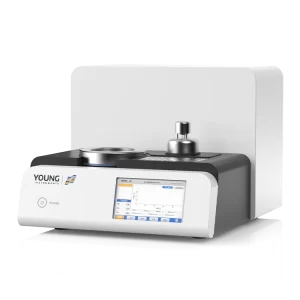
The DSC-40AE is a high-performance thermal analyzer based on the tower-type heat flux principle, designed to accurately measure heat flow differences between a sample and a reference material under precisely controlled temperature programs. With milligram-scale samples, the instrument provides reliable and accurate analysis of essential thermal properties, including specific heat capacity, glass transition temperature (Tg), melting point, enthalpy of fusion, reaction heat of thermosetting plastics, curing kinetics, and gel conversion rates.
Thermal Analysis and Calorimetry
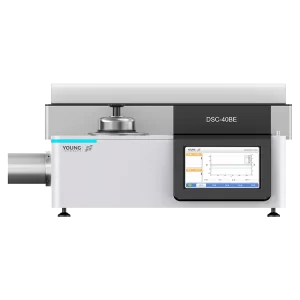
The DSC-40BE is a conventional Differential Scanning Calorimeter (DSC) based on the heat flux principle, designed for accurate thermal analysis of various materials. The instrument measures the difference in heat flow between a sample and a reference material as a function of temperature or time under controlled heating conditions. With only milligram-level sample quantities required, the DSC-40BE provides comprehensive thermal characterization, including enthalpy, melting point, crystallization temperature, glass transition temperature (Tg), specific heat capacity, purity, oxidation induction time (OIT), thermal stability, and Arrhenius kinetic parameters. The DSC-40BE is suitable for research, quality control, material characterization, and thermal stability studies across a wide range of applications.
Thermal Analysis and Calorimetry
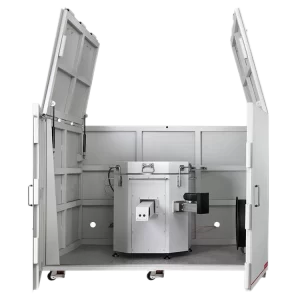
BAC-420AE - BAC-420BE - BAC-800AE - BAC-800BE - BAC-1000AE The BAC-420AE is a compact adiabatic calorimeter designed for large battery cells and small modules up to 600 mm in length. With a 420 mm furnace diameter and ±500 A current range, it provides a cost-effective and reliable platform for standard thermal runaway and heat generation studies. Test Parameters Thermal Runaway Onset Temperature, Maximum Rate of Temperature Rise, Adiabatic Temperature Rise, Specific Heat Capacity, etc. Applicable Fields Battery Pack, Battery Cell
Thermal Analysis and Calorimetry
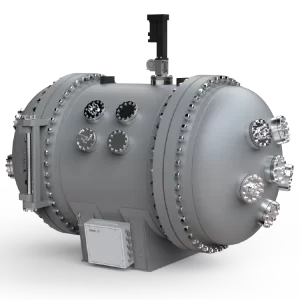
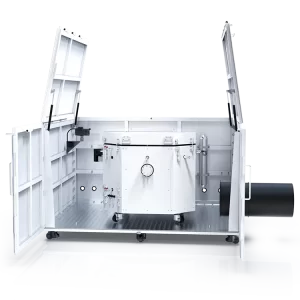
Built for the demands of next-generation battery testing, the BAC-1000AE accommodates large-format cells, modules, and partial pack assemblies up to 1,500 mm in length. Its 1,000 mm adiabatic furnace and ±1,000 A current capability provide the capacity needed for module-scale thermal runaway and gas generation testing. By combining controlled thermal conditions with realistic electrical loading, the BAC-1000AE delivers reliable insights into the thermal behavior and safety of high-capacity battery systems.
Thermal Analysis and Calorimetry
Designed for efficient testing of large-format battery cells and modules, the BAC-800AE accommodates samples up to 900 mm in length. Equipped with an 800 mm diameter furnace and a ±500 A current range, the system supports reliable thermal runaway studies as well as charge/discharge heat generation measurements, making it a practical solution for laboratory battery safety and thermal analysis.
Thermal Analysis and Calorimetry
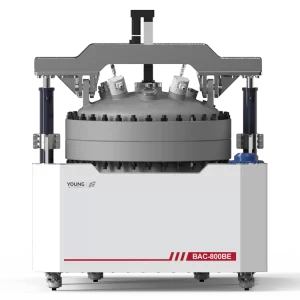
BAC-800BE is engineered for testing medium- to large-format battery cells and modules up to 900 mm in length. Featuring an 800 mm diameter furnace and a ±1000 A current capability, the system delivers the high-current performance required for demanding electrical abuse tests. It also enables reliable evaluation of heat generation during battery charge/discharge, particularly under high-load and elevated-current conditions.
Thermal Analysis and Calorimetry
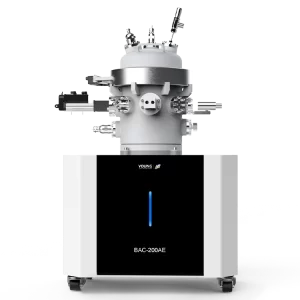
The BAC-200AE is an advanced adiabatic calorimeter designed for thermal safety evaluation of small-format batteries. It accommodates pouch cells up to 240 mm, cylindrical cells up to the 4680 format, and coin cells, providing a versatile solution for a wide range of battery testing applications. By accurately simulating an adiabatic environment, the BAC-200AE enables comprehensive thermal characterization, including thermal runaway analysis, gas evolution measurement, charge/discharge calorimetry, and specific heat capacity determination. The system delivers critical data for evaluating battery safety, optimizing thermal management strategies, and supporting the design, validation, and certification of next-generation energy storage systems.