

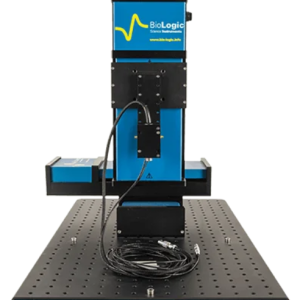
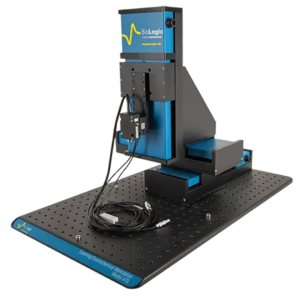
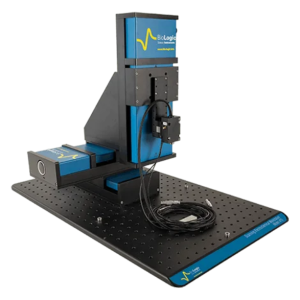
All scanning probe electrochemistry techniques are characterized by their visualization of local electrochemical characteristics. Unlike bulk electrochemical measurements, which provide an average of the electrochemical nature of a sample, scanning probe electrochemistry allows the correlation of sample features and their electrochemistry. This can provide users with further insight into the causes of the electrochemistry they see in the bulk system. Furthermore, users can understand how different sample features, like step edges, and grain boundaries affect the bulk electrochemistry.
Scanning Probe Electrochemistry on the M470
Scanning probe electrochemistry encompasses a range of techniques, which provide complementary information. The M470 can perform Scanning Electrochemical Microscopy (SECM), Intermittent Contact-SECM (ic-SECM), Localized Electrochemical Impedance Spectroscopy (LEIS), Scanning Vibrating Electrode Technique (SVET) (also known as vibrating probe), Scanning Kelvin Probe (SKP), Scanning Droplet Cell (SDC) and Optical Surface Profiling (OSP). Through a selection of the different modules a researcher can investigate:
- Surface activity
- Local impedance
- Local potential
- Local current
- Topography
The combination of these allows a complete description of the sample under study to be obtained.
Scanning probe electrochemistry has found use in any field in which researchers would like to further understand the factors contributing to the bulk electrochemistry measured. It has been firmly established in corrosion research, with the particular aim of understanding where and how corrosion processes start. In corrosion research, scanning electrochemical techniques are also used to determine the effectiveness of a treatment or coating and how improvements can be made to further passivate a system. In biology, scanning probe electrochemistry has been used to investigate living cells and particular emphasis has been placed on its use in screening biosensors. In the energy sector scanning probe electrochemistry has found use investigating batteries, fuel cells and photovoltaics. Materials science also benefits from the use of scanning probe electrochemistry, which has even been used to investigate 2D materials.
Overview: A fully modular instrument for a completely customizable scanning probe electrochemistry experience
- 9 techniques from 7 modules.
- Full range of accessories to tailor the experimental setup.
- 110 mm scan range on all 3 axes.
- Constant height and constant distance measurements available.
Completely modular and upgragable
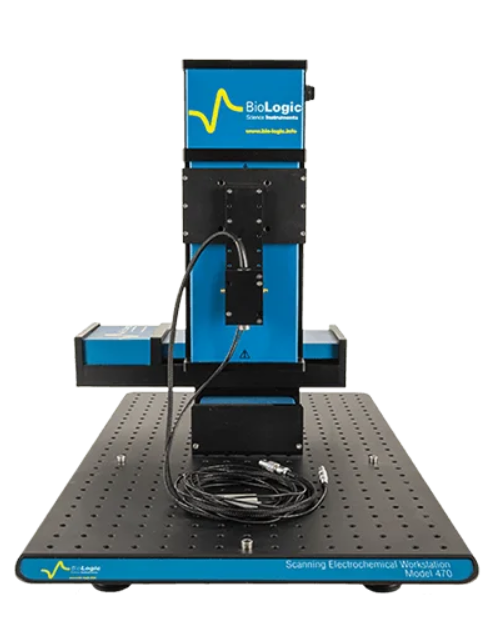
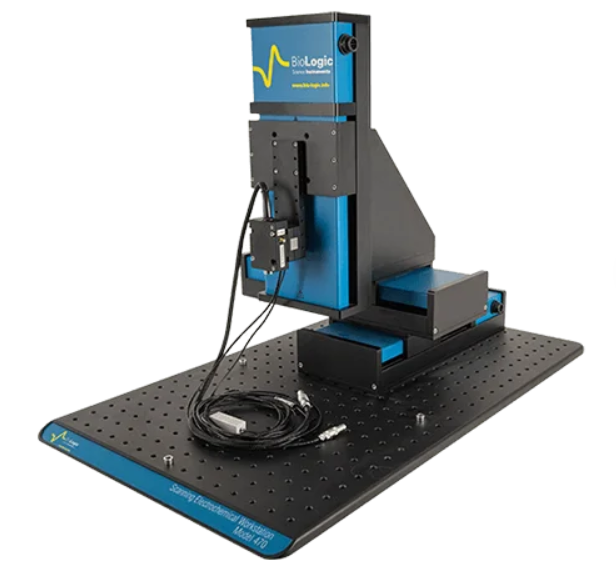
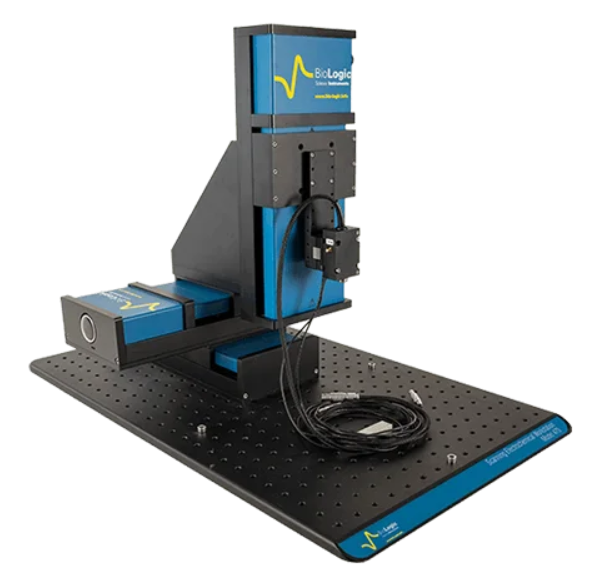
The M470 is the fourth generation scanning probe electrochemistry instrument available from Bio-Logic. Building on previous generations the M470 offers the highest level of flexibility yet. Users can select from seven different module types to perform nine different scanning probe techniques. This gives users a range of information from topography to electrochemical activity to sample current. The M470 adapts dynamically to the needs of researchers. Its modular nature means users can add further techniques, as and when experimental needs arise. All module electronics fit within the same control unit allowing users to grow their technique catalog without growing the spatial requirements of the instrument. A full range of probes and accessories is also available for users to fine-tune the M470 to meet their experimental needs.
Scanning stage… High Resolution and High Accuracy
The M470 scanning stage has been designed for scanning probe electrochemistry measurements. This means high resolution and high accuracy measurements. The movement of the scanning stage is highly repeatable without hysteresis. It maintains rectilinear movement, meaning the stage will not undergo twisting out of the axis of movement. Cross talk between the three axes is avoided. The M470 uses a closed-loop positioning system. The combination of these elements allows the M470 scanning stage to achieve high resolution and high accuracy measurements which do not show artifacts due to the positioning system.